Overview
Why visit Mleiha Archaeological Centre
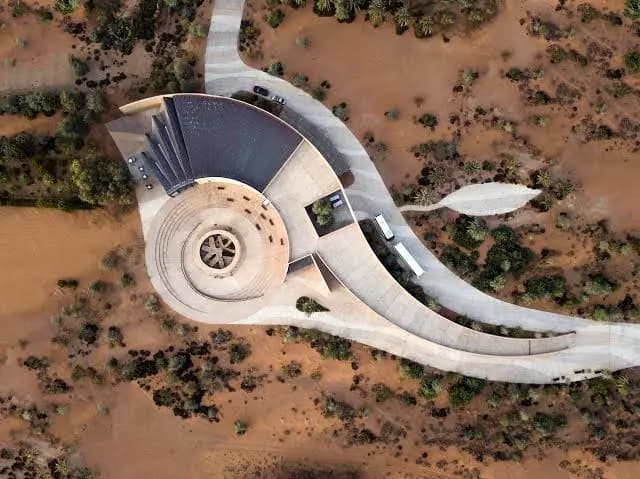
Mleiha Archaeological Centre is one of the most fascinating places to visit in Sharjah for travelers interested in ancient history, desert landscapes, archaeology, geology, and outdoor exploration. Located in Mleiha in the Central Region of Sharjah, away from the busy coastal city, the centre sits within a remarkable landscape of dunes, mountains, rock formations, fossil beds, and archaeological remains. It is not only a museum-style visitor centre but also a gateway to one of the UAE’s richest archaeological areas, where evidence of human settlement, trade, burial practices, and desert adaptation stretches across many historical periods.
The area around Mleiha is especially important because it connects natural history with human history. Visitors come here to see exhibits inside the archaeological centre, but the wider experience includes ancient tombs, excavated sites, dramatic desert scenery, Fossil Rock, Jebel Faya, and guided tours through locations that reveal how people lived in this region long before the modern United Arab Emirates. The landscape itself is part of the story. The desert, limestone outcrops, mountain edges, and fossil-bearing formations help explain how ancient communities moved, survived, traded, buried their dead, and adapted to changing environments.
Inside the visitor centre, exhibitions introduce the archaeology of Mleiha and the surrounding region in a clear and accessible way. Displays often focus on objects discovered during decades of excavation, including pottery, tools, weapons, jewelry, burial goods, coins, and other artifacts connected to ancient life in southeastern Arabia. The centre helps visitors understand different periods of occupation, from early human presence and Bronze Age settlements to Iron Age developments and pre-Islamic communities. For travelers who are not archaeology experts, this context is valuable because it turns the desert around Mleiha from a scenic landscape into a meaningful historical environment.
One of the most important features associated with the centre is the preserved Umm an-Nar tomb, a circular Bronze Age burial structure that gives visitors a direct link to the region’s ancient communities. Tombs are a major part of the Mleiha story, and several archaeological remains in the wider area show the importance of burial practices, social organization, and settlement patterns. Seeing these structures in the desert landscape makes the past feel more tangible than it would in a standard indoor museum. Guided tours are strongly recommended because many of the most interesting sites are easier to understand with expert explanation.
Mleiha is also closely linked to the wider Faya landscape, an area of major archaeological and geological importance. Jebel Faya and nearby sites have produced evidence connected to early human movement, ancient tools, and long-term occupation in Arabia. The region is also known for fossil-bearing rock formations, especially around Fossil Rock, where marine fossils remind visitors that this desert landscape was once shaped by very different environmental conditions. This combination of archaeology and geology makes Mleiha one of the most distinctive destinations in Sharjah. It appeals not only to history lovers, but also to travelers interested in landscapes, natural science, photography, and outdoor adventure.
The experience at Mleiha can be as calm or as active as visitors want it to be. Some travelers may spend their time inside the centre, then take a short guided archaeological tour. Others may combine the visit with desert drives, dune experiences, horse riding, stargazing, hiking-style walks, or guided visits to nearby natural formations. Mleiha National Park and the surrounding protected landscape are increasingly managed with conservation in mind, so visitors should follow official routes, use approved tours where required, and avoid unauthorized off-roading or entering restricted areas. This is especially important because the area contains sensitive archaeological and natural heritage.
Mleiha Archaeological Centre is ideal for families, students, culture-focused travelers, photographers, archaeology enthusiasts, and visitors who want to see a less urban side of Sharjah. Children often enjoy the desert setting, fossils, tombs, and sense of discovery, while adults can appreciate the depth of history and the quality of the landscape. The site is also a strong choice for travelers staying in Dubai or Sharjah who want a half-day or full-day trip outside the city. Compared with coastal attractions, Mleiha feels spacious, quiet, and dramatic, with open desert views and a strong sense of time.
A typical visit to the centre and a nearby guided archaeological stop may take around two to three hours. Travelers who add Fossil Rock, desert activities, sunset viewing, or stargazing should plan for a half day or longer. The best time to visit is from November to March, when the weather is cooler and outdoor exploration is much more comfortable. October and April can also be manageable, especially in the morning or late afternoon. During summer, the indoor centre can still be visited, but outdoor tours should be planned carefully because desert heat can be intense. Sunset is one of the most atmospheric times to be in the area, especially for photography and desert views.
Getting to Mleiha Archaeological Centre is easiest by private car, taxi arrangement, or organized tour. It is located well outside central Sharjah city, so visitors should plan transport in advance rather than relying on casual city movement. From Sharjah city or Dubai, the drive usually takes around one hour or more depending on starting point and traffic. A rental car is useful for flexibility, but travelers should not drive off-road unless they have the right vehicle, experience, and permission. For most visitors, official guided tours are the safest and most informative way to explore archaeological and desert locations beyond the centre.
Mleiha Archaeological Centre is worth visiting because it shows a side of the UAE that many travelers miss. The country is often associated with modern skylines, luxury hotels, shopping malls, and beaches, but Mleiha reveals a much older story of human movement, settlement, trade, burial, survival, and environmental change. It is one of Sharjah’s strongest cultural and natural attractions, combining museum learning with real archaeological landscapes. For travelers building a meaningful Sharjah itinerary, Mleiha offers depth, scenery, and discovery in a way few urban attractions can match.
Highlights
What stands out
Getting there
How to Go
Mleiha Archaeological Centre is located in Mleiha in the Central Region of Sharjah, away from the coastal city. The easiest way to reach it is by private car, rental car, taxi arrangement, or organized tour. From Sharjah city or Dubai, the drive usually takes around one hour or more depending on traffic and starting point. Visitors should plan transport in advance, especially for return travel. Use official guided tours for archaeological sites, desert routes, and protected areas, and avoid unauthorized off-road driving.
Before you go
Practical Info
Seasonality
Best Time to Visit
November to March is the best season for Mleiha Archaeological Centre because the weather is cooler for outdoor archaeological tours, desert walks, photography, and nearby landscape visits. October and April can also be suitable in the morning or late afternoon.
On the ground
Travel Tips
- Book guided archaeological or desert experiences in advance if you want more than the visitor centre.
- Visit in the late afternoon for cooler weather, softer light, and excellent desert photography.
- Do not attempt off-road driving unless it is permitted, suitable for your vehicle, and handled safely.
- Combine the centre with Fossil Rock or Jebel Faya for a stronger half-day itinerary.
- Carry water, sunglasses, sunscreen, and a hat because the desert environment can be harsh.
- Wear comfortable closed shoes for walking around archaeological and desert areas.
- Check the latest timings during Ramadan, public holidays, and summer months.
- Allow enough travel time from Dubai or Sharjah city, especially if returning after sunset.
FAQs
Common questions
Mleiha Archaeological Centre is located in Mleiha in the Central Region of Sharjah, near Jebel Faya and Fossil Rock.
It is famous for archaeological exhibitions, ancient tombs, Bronze Age and pre-Islamic remains, desert landscapes, fossils, and guided heritage tours.
Most visitors need around two to three hours for the centre and a basic archaeological tour, while a half-day is better if adding desert activities or sunset views.
Yes, it is one of Sharjah’s most important heritage attractions and offers a rare combination of archaeology, desert scenery, fossils, and ancient history.
Yes, it can be visited from Dubai by car, arranged taxi, or organized tour, with travel time usually around one hour or more depending on traffic.
Nearby highlights include Fossil Rock, Jebel Faya, ancient tombs, archaeological sites, desert landscapes, and parts of the wider Mleiha National Park area.
A guided tour is strongly recommended because many archaeological sites and landscape features are easier to understand with expert explanation and official access.
The best time to visit is from November to March, especially in the morning or late afternoon when outdoor exploration is cooler and more comfortable.