Overview
Why visit Al Bidya Mosque
Al Bidya Mosque is one of the most meaningful cultural stops in Fujairah and a landmark that gives travelers a direct connection to the UAE’s early Islamic and coastal heritage. Located in the village of Al Bidya, north of Fujairah city, the mosque stands in a quiet setting between mountain slopes and the Gulf of Oman coastline. It is small in size, but its historical value is immense. Official Fujairah tourism describes Al Bidya Mosque as the UAE’s oldest existing mosque, built in 1599, while the UAE Ministry of Economy and Tourism describes it as the oldest mosque in the country, with construction dating back to 1446. Because historical sources vary on exact dating, the safest way to understand the site is as one of the UAE’s oldest surviving mosques and one of Fujairah’s most treasured heritage landmarks.
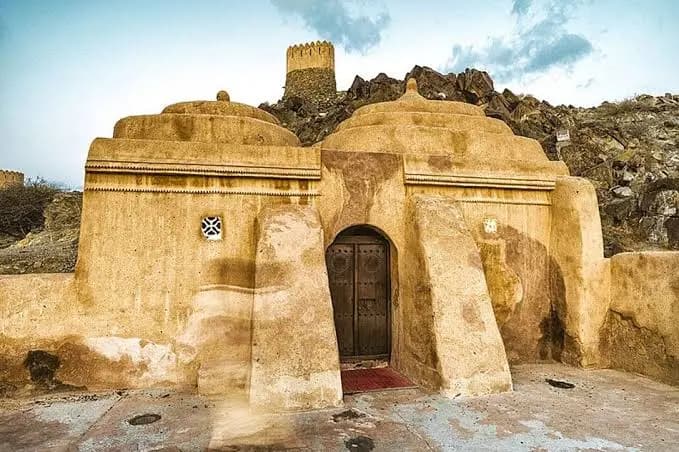
The first thing visitors notice is the mosque’s unusual form. Unlike the large marble mosques seen in modern UAE cities, Al Bidya Mosque is compact, modest, and deeply rooted in its local environment. It was built using traditional materials such as stone and mud, with whitewashed surfaces that help it blend into the surrounding village landscape. Its most recognizable feature is the set of four low domes on the roof, supported by a central internal pillar. This gives the mosque a distinctive architectural identity and makes it instantly different from many other mosques in the region. The structure does not rely on grand scale or decorative luxury. Its beauty comes from proportion, age, simplicity, and the feeling that it has remained closely connected to daily life for centuries.
The mosque is still respected as a religious site, so visitors should approach it with the same care they would give any active place of worship. Non-Muslim travelers may be able to view the exterior and surrounding heritage area, while access inside can depend on prayer times, local guidance, and visitor rules at the time of arrival. Modest clothing is important. Shoulders and knees should be covered, and women should carry a scarf in case head covering is requested. Shoes should not be worn inside prayer areas if entry is allowed. Even if visitors only see the mosque from outside, the experience is rewarding because the building’s setting, form, and history are the main reasons to visit.
Al Bidya Mosque is especially valuable because it tells a different story from the UAE’s modern city landmarks. This is not a place of skyscrapers, malls, or large-scale tourism. It reflects an older rhythm of life along the east coast, where fishing villages, farms, mountain routes, and small communities shaped the development of Fujairah. The mosque’s location near the coast and below rocky slopes shows how settlement, worship, and defense were connected in this region. The nearby watchtowers above the mosque add to the atmosphere and help visitors understand why this area mattered historically. From the elevated points around the site, travelers can often enjoy views over Al Bidya village, the coast, and the mountain landscape.
For photographers, Al Bidya Mosque is one of Fujairah’s most atmospheric heritage subjects. The best images usually come from a respectful distance, capturing the mosque with the mountains behind it or from the surrounding paths that show its domed roof and whitewashed walls. Early morning and late afternoon are the best times for softer light and more comfortable temperatures. Midday sun can be harsh, especially in warmer months, but the mosque’s clean shape and traditional materials still photograph well against a clear sky. Visitors should avoid intrusive photography during prayer times and should never photograph worshippers closely without permission.
A visit to Al Bidya Mosque does not require much time, but it benefits from a slower pace. Many travelers stop for 20 to 45 minutes, enough to see the mosque, walk carefully around the heritage area, take photos, and view the surrounding watchtowers from below or from accessible paths. Those interested in history may want longer, especially if combining the site with Fujairah Fort, Fujairah Museum, Al Aqah Beach, or the nearby coastal route. It works very well as part of an east coast road trip from Dubai, Sharjah, or Fujairah city. The road journey adds to the experience, with scenery changing from urban highways to mountains, villages, and the Gulf of Oman coastline.
The best season to visit Al Bidya Mosque is from November to March, when outdoor sightseeing is most comfortable. During summer, it is better to visit early in the morning or late in the afternoon because the site is exposed and temperatures can be high. Comfortable footwear is recommended, especially if walking around the surrounding heritage area or viewing the nearby towers. Visitors should bring water, sun protection, and a respectful attitude. This is a small historic mosque, not a large managed museum, so the experience depends on quiet observation rather than entertainment.
Al Bidya Mosque is ideal for travelers who enjoy heritage, architecture, religious history, photography, and meaningful short stops during a road trip. It is also a good place for families to introduce children to the UAE’s older history in a simple and memorable way. The mosque’s importance comes not only from its age, but from the fact that it remains a visible reminder of community life before the rapid modernization of the country. For anyone visiting Fujairah, Al Bidya Mosque is one of the essential cultural landmarks to include, especially when paired with the emirate’s forts, beaches, and mountain scenery.
Highlights
What stands out
Getting there
How to Go
Al Bidya Mosque is located in Al Bidya village, north of Fujairah city on the UAE’s east coast. The easiest way to visit is by private car, taxi, or guided east coast tour. From Fujairah city, the drive is usually straightforward along the coastal road toward Dibba and Al Aqah. Travelers coming from Dubai or Sharjah can include the mosque as part of a full-day Fujairah itinerary with Fujairah Fort, Al Aqah Beach, Snoopy Island, and mountain viewpoints. Public transport is limited for flexible sightseeing, so a car or arranged transfer is the most practical option.
Before you go
Practical Info
Seasonality
Best Time to Visit
November to March
On the ground
Travel Tips
- Visit in the morning or late afternoon for softer light and cooler weather
- Dress respectfully, with shoulders and knees covered
- Women should carry a scarf in case head covering is requested near the mosque
- Avoid entering or photographing during prayer times unless clearly permitted
- Combine the mosque with Al Aqah Beach, Snoopy Island, or Fujairah Fort for a fuller trip
- Take time to view the mosque from different angles rather than rushing the stop
- Do not climb on fragile or restricted heritage structures around the site
FAQs
Common questions
Al Bidya Mosque is located in Al Bidya village, north of Fujairah city on the east coast of the United Arab Emirates.
Al Bidya Mosque is famous as one of the oldest surviving mosques in the UAE and for its distinctive four-domed traditional architecture.
Historical sources vary, but Al Bidya Mosque is widely dated between the 15th and 16th centuries and is one of the UAE’s oldest mosque sites.
Non-Muslim visitors can usually view the mosque and surrounding heritage area, but interior access may depend on prayer times and local visitor rules.
Visitors should dress modestly, covering shoulders and knees, and women should carry a scarf in case head covering is requested.
Most visitors need around 20 to 45 minutes to see the mosque, take photos, and explore the surrounding heritage area.
Yes, Al Bidya Mosque is one of Fujairah’s most important cultural landmarks and is worth visiting for history, architecture, and photography.
Nearby places include Al Aqah Beach, Snoopy Island, Fujairah Fort, Fujairah Museum, Khor Fakkan, and scenic east coast viewpoints.