Overview
Why visit Sohar Fort
Sohar Fort stands proudly in the heart of Sohar and represents one of the most significant historical monuments in northern Oman. With its commanding position near the coastline, the fort has witnessed centuries of trade, exploration, conflict, and cultural exchange. As one of the country's most important heritage sites, it offers visitors an opportunity to discover the fascinating story of a city that was once among the leading ports of the Islamic world.
Sohar itself has a long and distinguished history. During the medieval period, it was known as a major trading hub connecting Oman with India, Persia, East Africa, and China. Many historians regard Sohar as one of the wealthiest and most influential cities in the region during its peak. The city's strategic location on the Gulf of Oman contributed significantly to its prosperity and made it an important center for commerce and maritime activity.
The exact origins of Sohar Fort are difficult to determine, as the structure has undergone numerous renovations and expansions throughout its history. The fort seen today reflects centuries of architectural development influenced by various rulers and periods. Its distinctive design combines defensive features with administrative and residential functions, highlighting its importance beyond purely military purposes.
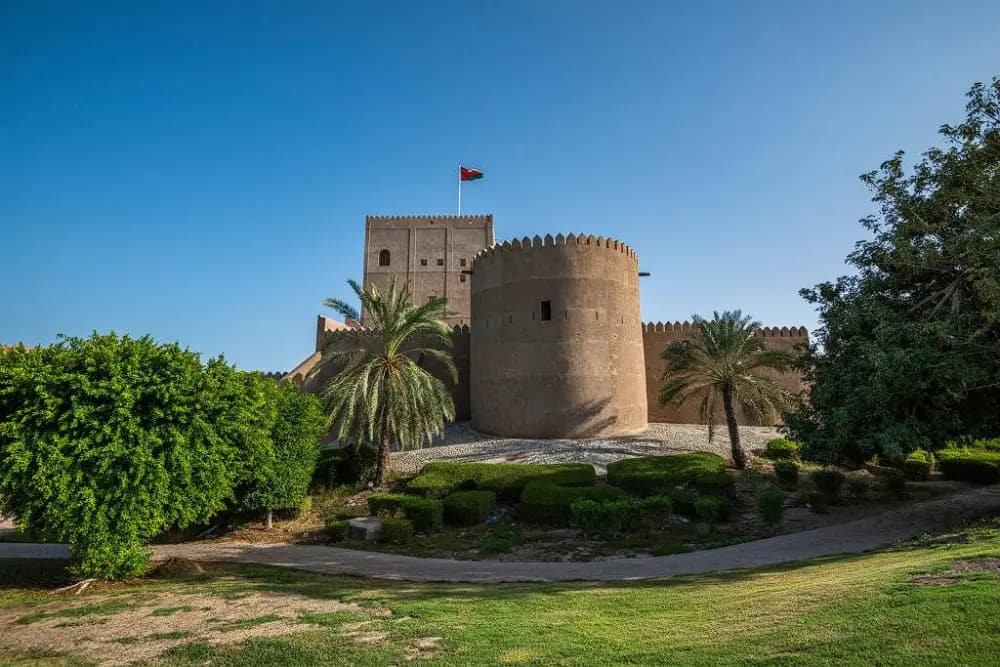
One of the most striking features of the fort is its large circular tower, which dominates the structure and serves as a visual landmark throughout the city. Thick walls, defensive battlements, and elevated observation points demonstrate how the fort was designed to protect the settlement from external threats while maintaining control over the surrounding area.
Visitors entering the fort can explore a variety of rooms, courtyards, passageways, and exhibition spaces that have been carefully restored and preserved. The interior houses a museum that presents the history of Sohar and the wider Al Batinah region. Through artifacts, displays, models, and interactive exhibits, visitors gain insight into the city's maritime traditions, trade networks, cultural heritage, and economic development.
The museum also highlights Sohar’s connection to seafaring legends and exploration. The city is often associated with the legendary sailor Sinbad, whose adventures became famous throughout the Arab world and beyond. While the historical basis of these stories remains uncertain, they contribute to Sohar’s reputation as a city closely linked to maritime exploration and adventure.
Walking through the fort provides a deeper appreciation of traditional Omani architecture. Constructed using local materials, the building incorporates practical design elements suited to the climate and defensive requirements of the period. The combination of towers, courtyards, staircases, and thick walls reflects the ingenuity of Omani builders and military planners.
The upper levels of the fort offer excellent views of Sohar and its surroundings. Visitors can observe the modern city, nearby coastline, and sections of the Gulf of Oman from elevated vantage points that once served as strategic observation posts. These viewpoints also provide excellent opportunities for photography and sightseeing.
Photography enthusiasts will find numerous subjects throughout the site. Historic architecture, restored interiors, defensive structures, museum exhibits, and panoramic views create a variety of photographic opportunities. The contrast between the historic fort and the modern city skyline further enhances the visual appeal of the destination.
The fort's central location makes it easy to combine with other attractions in Sohar. Nearby parks, beaches, shopping areas, and cultural sites allow visitors to explore both the historical and contemporary sides of the city. Many travelers include the fort as the centerpiece of their Sohar itinerary.
Families, history enthusiasts, students, photographers, and cultural travelers all enjoy visiting Sohar Fort. The museum exhibits provide educational value, while the architecture and historical significance make it an engaging destination for visitors of all ages.
The best time to visit is between October and April when temperatures are cooler and more comfortable for sightseeing. Morning and late afternoon visits are particularly pleasant and provide favorable lighting conditions for photography.
A visit to Sohar Fort offers a journey through centuries of Omani history. Through its architecture, exhibits, and strategic location, the fort reveals the story of a city that once stood at the crossroads of global trade and maritime exploration. It remains one of the most important heritage attractions in northern Oman and a must-visit destination for anyone exploring the Al Batinah region.
Highlights
What stands out
Getting there
How to Go
Sohar Fort is located in the center of Sohar and can be reached easily by private car, taxi, or local transportation. The fort is approximately two hours by road from Muscat via the Muscat–Sohar Highway.
Before you go
Practical Info
Seasonality
Best Time to Visit
October to April
On the ground
Travel Tips
- Visit during cooler morning hours
- Bring a camera for panoramic views and architecture photography
- Read the museum exhibits to fully appreciate the history
- Combine your visit with Sohar’s waterfront attractions
- Wear comfortable walking shoes
- Allow time to explore the surrounding city center
- Check opening hours before visiting
FAQs
Common questions
Sohar Fort is famous for its historical significance, maritime heritage exhibits, and its role in protecting one of Oman’s most important trading cities.
The fort is located in the center of Sohar in Al Batinah North Governorate, Oman.
Yes, visitors can explore the fort, museum exhibits, towers, and courtyards.
Most visitors spend between one and two hours exploring the site.
Yes, the fort is family-friendly and offers educational exhibits suitable for all ages.
Visitors can see historical artifacts, maritime displays, architectural features, and museum exhibits related to Sohar’s history.
Sohar is approximately 200 kilometers from Muscat and can typically be reached in around two hours by car.
October to April offers the most comfortable weather for sightseeing.