Overview
Why visit Hili Archaeological Park
Hili Archaeological Park is one of the most significant historic sites in Al Ain and one of the best places in the United Arab Emirates to understand the country’s ancient past. Located in the Hili area of Al Ain, the park combines landscaped gardens with archaeological remains that date back thousands of years. It is not only a pleasant public space but also part of the wider Cultural Sites of Al Ain, a UNESCO World Heritage listing that includes Hafit, Hili, Bidaa Bint Saud, and the oasis areas of the city. For travelers who want to see the UAE beyond modern skylines, Hili Archaeological Park is an essential stop.
The park was developed to make Al Ain’s ancient monuments easier for visitors to access and understand. Many of the most important remains belong to the Umm an-Nar period, which dates from around 2500 BCE to 2000 BCE. This period is one of the key chapters in the early history of the Arabian Peninsula, and Hili contains some of the most important Bronze Age structures in the UAE. The site helps show that Al Ain was not an isolated desert settlement, but part of a wider world of trade, agriculture, settlement, and cultural exchange thousands of years ago.
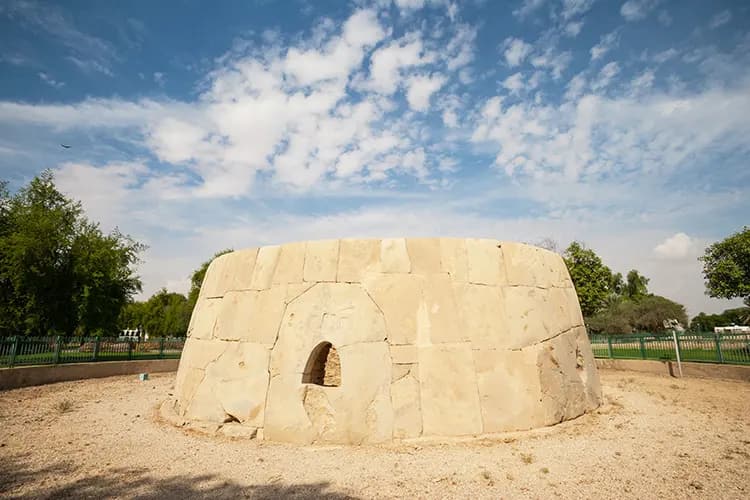
The most famous feature of Hili Archaeological Park is the Hili Grand Tomb, which dates to around 2000 BCE. The tomb is one of the site’s most recognizable monuments and is known for its circular shape and carved reliefs. Although reconstructed, it gives visitors a powerful visual impression of Bronze Age burial architecture in the region. The tomb also helps make the site easier to appreciate, especially for travelers who may not be familiar with archaeology. Instead of seeing only low ruins or stone outlines, visitors can connect with a clear and memorable structure that represents the sophistication of ancient communities.
Beyond the Grand Tomb, the Hili area contains remains of settlements, other tombs, and structures linked to different periods of occupation. The wider Hili archaeological landscape gives evidence of Bronze Age and Iron Age activity, including tombs, houses, forts, and early irrigation systems. These remains are important because they show long-term human settlement in Al Ain and help explain why the city became one of the region’s historic oasis centres. Water, agriculture, protection, and trade all played a role in making Al Ain a place where communities could survive and grow in a desert environment.
The experience of visiting Hili Archaeological Park is calm and accessible. Unlike remote archaeological sites that require long drives or specialist knowledge, Hili is set within a public garden, making it suitable for families, casual travelers, students, and history lovers. Visitors can walk through landscaped paths, pause in shaded areas, and explore visible monuments at a relaxed pace. This combination of greenery and archaeology gives the site a unique atmosphere. It feels educational without being difficult, and it offers a slower experience than Al Ain’s busier family attractions.
For travelers interested in photography, Hili Archaeological Park offers subtle but rewarding subjects. The Grand Tomb is the main visual highlight, especially when photographed with soft morning or late afternoon light. The stone forms, garden setting, pathways, and open spaces create a different kind of image from Al Ain’s forts and mountain viewpoints. The park is especially useful for travelers who want to capture the heritage side of the UAE in a peaceful outdoor environment. Because the site is not as visually dramatic as Jebel Hafeet or as large as Al Ain Oasis, slowing down and observing details makes the visit more rewarding.
Hili Archaeological Park also works well as part of a broader Al Ain heritage itinerary. Visitors can combine it with Al Ain Oasis to understand traditional water management and palm agriculture, Al Jahili Fort to see late 19th-century defensive architecture, Qasr Al Muwaiji to learn about Abu Dhabi’s ruling history, and Jebel Hafeet to experience the natural landscape around the city. Together, these attractions show why Al Ain is one of the UAE’s most important cultural destinations. Hili adds the deepest historical layer, taking the story back thousands of years before the modern state.
The park is particularly suitable for families because it gives children space to walk while also introducing them to archaeology in a simple way. It is also a good choice for travelers who may not want a long museum visit but still want meaningful cultural content. Couples and solo travelers can enjoy the quiet atmosphere, while UAE residents may find it a useful weekend stop when visiting Al Ain from Abu Dhabi, Dubai, or other Emirates. It is not a high-energy attraction, but that is part of its value. Hili Archaeological Park rewards curiosity, patience, and interest in place.
The best time to visit is from November to March, when Al Ain’s weather is more comfortable for outdoor walking. Summer temperatures can be very high, so visits should be planned in the early morning or late afternoon if traveling during hotter months. Comfortable shoes, water, and sun protection are recommended, even though the park has landscaped and shaded sections. Visitors should also remember that this is an archaeological site, so climbing on monuments, touching sensitive remains, or disturbing protected areas should be avoided.
Access is easiest by car or taxi. Hili Archaeological Park is located outside the central heritage area of Al Ain, on the road toward Dubai, and it is around 10 kilometres from central Al Ain. A rental car is useful because the city’s main attractions are spread out, and Hili is best combined with other sites rather than visited as a standalone full-day destination. From Abu Dhabi or Dubai, travelers can include the park in a day trip, although an overnight stay in Al Ain allows a more relaxed heritage-focused itinerary.
What makes Hili Archaeological Park special is its ability to connect an ordinary garden visit with a much older human story. The site shows that the UAE’s history did not begin with oil, towers, or modern cities. It reaches back to ancient communities that built tombs, managed water, formed settlements, and lived within the same desert landscape that visitors see today. For anyone interested in the roots of Al Ain and the deeper heritage of the Emirates, Hili Archaeological Park is one of the most valuable and memorable places to visit.
Highlights
What stands out
Getting there
How to Go
Hili Archaeological Park is located in the Hili area of Al Ain, around 10 kilometres from central Al Ain on the road toward Dubai. It is easiest to reach by car, taxi, or guided tour. A rental car is the most convenient option for travelers coming from Abu Dhabi or Dubai, as Al Ain’s main attractions are spread across the city. The park can be combined with Al Ain Oasis, Al Jahili Fort, Qasr Al Muwaiji, Al Ain Zoo, and Jebel Hafeet in a full-day or overnight Al Ain itinerary.
Before you go
Practical Info
Seasonality
Best Time to Visit
November to March
On the ground
Travel Tips
- Visit in the cooler months for the most comfortable walking experience.
- Go in the morning or late afternoon for softer light and better photography.
- Read available signs carefully to understand the archaeological importance of the site.
- Combine Hili with Al Ain Oasis and Al Jahili Fort for a complete heritage route.
- Bring water, especially if visiting outside winter.
- Keep children supervised around archaeological remains and protected areas.
- Use a car or taxi because the park is outside the central Al Ain heritage district.
- Avoid rushing, as the site is best appreciated by observing details slowly.
FAQs
Common questions
Hili Archaeological Park is located in the Hili area of Al Ain, Abu Dhabi Emirate, United Arab Emirates.
Hili Archaeological Park is important because it contains some of the UAE’s most significant Bronze Age remains and forms part of Al Ain’s UNESCO-listed cultural landscape.
The Hili Grand Tomb is a circular Bronze Age tomb dating to around 2000 BCE and is the most famous monument inside the park.
Hili Archaeological Park is part of the Cultural Sites of Al Ain, which are listed as a UNESCO World Heritage property.
Most visitors need around one to two hours to walk through the park, see the main monuments, and enjoy the garden setting.
Yes, the park is suitable for families because it combines open garden space with accessible archaeological remains.
The best time to visit is from November to March, especially in the morning or late afternoon when outdoor walking is more comfortable.
Nearby attractions include Al Ain Oasis, Al Jahili Fort, Qasr Al Muwaiji, Al Ain Zoo, and Jebel Hafeet.